
Best Month to Visit Iceland: A Complete Month-by-Month Guide
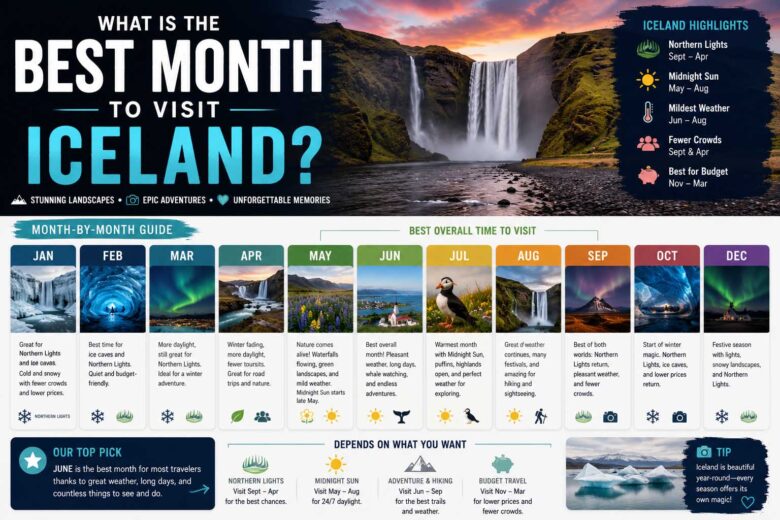
Choosing the best month to visit Iceland depends on the experience you want most. Some travelers dream of seeing the Northern Lights, while others hope to drive the Ring Road beneath the midnight sun or hike through colorful volcanic landscapes. Every season offers something unique, so the ideal time to visit comes down to your priorities, budget, and favorite outdoor activities.
Whether you’re planning your first Iceland adventure or returning to explore more of this incredible island, this guide explains what each month offers so you can book your trip with confidence.
Best Month to Visit Iceland at a Glance
Before looking at each season in detail, here’s a quick comparison.
| Month | Best For |
|---|---|
| January | Northern Lights, ice caves, winter photography |
| February | Glacier tours, fewer tourists |
| March | Winter adventures with longer daylight |
| April | Shoulder season, waterfalls, lower prices |
| May | Puffins, scenic drives, mild weather |
| June | Midnight sun, hiking, Ring Road |
| July | Highlands, camping, outdoor activities |
| August | Whale watching, festivals, road trips |
| September | Northern Lights, autumn colors |
| October | Fewer crowds, aurora viewing |
| November | Ice caves, winter scenery |
| December | Christmas markets, festive atmosphere, Northern Lights |
For many visitors, September offers the best balance of weather, prices, and seasonal attractions.
What Is the Best Month to Visit Iceland?
If you’re asking what is the best month to visit Iceland, the answer depends entirely on your travel goals.
June and July for Outdoor Adventures
Summer is the easiest time to explore Iceland.
During these months you’ll enjoy:
- Nearly 24 hours of daylight
- Open mountain roads
- Comfortable temperatures
- Easy access to hiking trails
- Excellent driving conditions
This is also peak tourist season, so accommodations and rental cars often sell out months in advance.
Travelers who enjoy dramatic Nordic scenery sometimes compare Iceland with the best time to visit norway before deciding which destination better fits their preferred travel season.
September for the Best Overall Experience
Many experienced visitors consider September the ideal month.
You’ll enjoy:
- Pleasant temperatures
- Smaller crowds
- Lower accommodation prices than midsummer
- Autumn landscapes
- Returning Northern Lights
Most major attractions remain fully accessible, making September an excellent choice for first-time visitors.
Best Month to Visit Iceland for Northern Lights
The best month to visit Iceland for northern lights falls between September and March, when nights become dark enough to see the colorful displays.
Your chances improve with:
- Clear skies
- Low light pollution
- Strong solar activity
- Staying several nights
Although no month guarantees an aurora, October, February, and March are among the most reliable choices.
Best Months for Aurora Viewing
| Month | Aurora Potential |
|---|---|
| September | Excellent |
| October | Excellent |
| November | Very Good |
| December | Excellent |
| January | Excellent |
| February | Excellent |
| March | Very Good |
Winter weather can change quickly, so flexibility improves your chances.
Month-by-Month Weather Guide
January to March
Winter transforms Iceland into a frozen wonderland.
Highlights include:
- Ice cave tours
- Snow-covered waterfalls
- Glacier hiking
- Frozen volcanic landscapes
- Northern Lights
Road conditions can become challenging, especially outside the Ring Road, so checking weather forecasts every day is essential.
April and May
Spring slowly arrives across the island.
You’ll notice:
- Longer daylight hours
- Melting snow
- Blooming landscapes
- Smaller crowds
- Improving road conditions
May is particularly popular among photographers because waterfalls are full from melting snow and wildflowers begin appearing across parts of the countryside.
June to August
Summer offers Iceland’s warmest weather.
Expect:
- Midnight sun
- Green valleys
- Open Highland roads
- Whale watching
- Puffin colonies
- Comfortable sightseeing temperatures
If you’re considering another destination known for incredible summer wilderness and glacier scenery, comparing the best time to visit alaska can help you decide which adventure better suits your travel style.
September to December
Autumn gradually gives way to winter.
During these months you’ll find:
- Colorful landscapes
- Longer nights
- Returning Northern Lights
- Ice cave season
- Christmas celebrations
Weather becomes less predictable, but you’ll also encounter fewer visitors outside holiday periods.
Best Month to Visit Blue Lagoon Iceland
The best month to visit Blue Lagoon Iceland depends on the atmosphere you’re looking for.
Winter Visits
Many travelers love relaxing in the warm geothermal water while snow falls around them.
Winter offers:
- Beautiful snowy scenery
- Steam rising into cold air
- Cozy evenings
- Northern Lights opportunities nearby
Reservations are highly recommended during holidays.
Summer Visits
Summer provides:
- Long daylight hours
- Comfortable temperatures
- Easier travel conditions
- More flexibility for sightseeing
Early morning and late evening visits are usually quieter than midday.
Things to Do During Every Season
While some activities are seasonal, many of Iceland’s highlights can be enjoyed year-round.
Winter Experiences
- Ice cave tours
- Glacier hikes
- Snowmobiling
- Northern Lights tours
- Geothermal spas
Summer Adventures
- Ring Road road trips
- Hiking
- Whale watching
- Puffin colonies
- Highland exploration
Attractions Open All Year
- Reykjavík
- Blue Lagoon
- Golden Circle
- Black sand beaches
- Seljalandsfoss
- Skógafoss
Travelers who enjoy rugged coastlines, castles, and changing weather may also enjoy comparing Iceland with the best time to visit scotland, since both destinations offer unforgettable landscapes in every season.
When Is Iceland the Cheapest?
Iceland has a reputation for being expensive, but visiting during the shoulder season can reduce your travel costs considerably.
The most affordable months are often:
- January (outside New Year holidays)
- February
- April
- October
- November
During these months you’ll usually find:
- Lower airfare
- Better hotel rates
- Less crowded attractions
- More tour availability
Summer remains the most expensive season because visitor demand is highest.
Budget Tips for Visiting Iceland
A little planning goes a long way when managing your travel budget.
You can save money by:
- Booking flights early.
- Traveling during shoulder season.
- Staying in guesthouses.
- Cooking some of your meals.
- Sharing rental cars with friends.
- Booking tours in advance.
Even small adjustments can significantly reduce your daily travel expenses.
Getting Around Iceland
Most visitors choose to rent a car because it offers the greatest flexibility.
A self-drive trip allows you to stop at waterfalls, lava fields, glaciers, and viewpoints whenever you like.
Your main transportation options include:
- Rental cars
- Camper vans
- Guided tours
- Public buses
- Domestic flights
If you’re visiting between October and April, consider renting a four-wheel-drive vehicle. Winter weather can change quickly, and some roads become icy or temporarily closed.
Where to Stay
Choosing the right place to stay depends on your itinerary.
Reykjavík
The capital is the best base if you:
- Have three to five days
- Prefer guided day tours
- Don’t plan to rent a car
- Want restaurants, cafés, and museums nearby
Many visitors spend their first and last nights here before exploring the countryside.
South Coast
The South Coast is ideal if you want to spend more time near Iceland’s most famous natural attractions.
Popular highlights include:
- Seljalandsfoss
- Skógafoss
- Reynisfjara Black Sand Beach
- Jökulsárlón Glacier Lagoon
Staying along this route reduces driving time and lets you enjoy sunrise or sunset without rushing back to Reykjavík.
North Iceland
Travelers looking for quieter landscapes often head north.
Akureyri makes an excellent base for:
- Whale watching
- Geothermal baths
- Volcanic landscapes
- Scenic coastal drives
North Iceland also receives fewer visitors than the south during much of the year.
Suggested Itineraries
The amount of time you spend in Iceland affects how much you can comfortably see.
| Trip Length | Recommended Itinerary |
|---|---|
| 3 Days | Reykjavík, Golden Circle, Blue Lagoon |
| 5 Days | Add the South Coast and glacier lagoon |
| 7 Days | Explore much of the Ring Road highlights |
| 10–14 Days | Complete the Ring Road with optional Westfjords or Highlands (summer) |
Avoid trying to fit every attraction into a short visit. Iceland’s weather often changes unexpectedly, so leaving room for flexibility makes the trip much more enjoyable.
What to Pack
Packing layers is the secret to staying comfortable in Iceland.
Bring:
- Waterproof jacket
- Waterproof pants
- Warm fleece
- Thermal base layers
- Hiking boots
- Hat and gloves
- Swimsuit
- Sunglasses
- Portable power bank
- Reusable water bottle
Even during July, strong winds and rain showers are common.
Food to Try
Iceland’s cuisine is simple, fresh, and heavily influenced by the surrounding ocean.
Popular dishes include:
- Icelandic lamb soup
- Arctic char
- Fish and chips
- Seafood stew
- Skyr yogurt
- Rye bread baked with geothermal heat
If you’re feeling adventurous, you can also sample fermented shark, although it’s considered more of a cultural experience than a favorite meal.
Family Travel Tips
Iceland is one of Europe’s most family-friendly destinations.
Children often enjoy:
- Watching geysers erupt
- Visiting waterfalls
- Whale-watching tours
- Lava fields
- Hot springs with family-friendly facilities
Summer is generally the easiest season for families because roads remain open longer, weather is milder, and daylight lasts well into the evening.
Solo Travel in Iceland
Iceland consistently ranks among the safest countries in the world, making it a fantastic destination for solo travelers.
To stay safe:
- Check weather forecasts daily.
- Share hiking plans if visiting remote trails.
- Refuel your vehicle whenever possible outside larger towns.
- Keep emergency clothing in your car during winter.
- Respect road closures and warning signs.
Joining guided glacier hikes or Northern Lights tours is also a great way to meet other travelers.
Mistakes to Avoid
Many first-time visitors make the same planning errors.
Try to avoid these common mistakes:
- Packing for only one type of weather.
- Driving long distances every day.
- Ignoring wind forecasts.
- Underestimating fuel costs.
- Booking accommodations too late during summer.
- Walking beyond safety barriers near cliffs and waterfalls.
- Trying to see the entire country in just a few days.
A slower itinerary usually leads to a much better experience.
Comparing Iceland With Other Nature Destinations
If you’re still deciding where to travel, Iceland shares some similarities with other scenic destinations while offering a very different overall experience.
Travelers interested in lush green countryside, dramatic cliffs, and coastal drives often research the best time to visit ireland before choosing between the two. Meanwhile, those who prefer alpine lakes, mountain hiking, and glacier-fed valleys may also compare Iceland with the best time to visit glacier national park to determine which destination better matches their travel goals.
Each destination is spectacular, but Iceland stands apart with its combination of volcanoes, glaciers, waterfalls, geothermal lagoons, and black sand beaches.
Frequently Asked Questions
What is the best month to visit Iceland?
September is often considered the best overall month because it combines pleasant weather, smaller crowds, lower prices than peak summer, and the return of the Northern Lights.
What is the best month to visit Iceland for Northern Lights?
September through March offers the best opportunities. October, February, and March are especially popular because they balance long nights with good sightseeing conditions.
Is summer too crowded?
Although you’ll enjoy excellent weather and nearly endless daylight, you’ll also encounter higher prices and busier attractions.
What is the cheapest month to visit Iceland?
January, February, April, October, and November usually provide the best value on flights and accommodations outside major holidays.
Is winter a good time to visit?
Yes. Winter is perfect for travelers interested in snowy landscapes, ice caves, glacier adventures, geothermal spas, and the Northern Lights. Be prepared for shorter days and changing road conditions.
How many days should I spend in Iceland?
Five to seven days gives you enough time to experience Reykjavík, the Golden Circle, and the South Coast. If you want to drive the entire Ring Road comfortably, plan for at least 10 to 14 days.
Make the Most of Your Iceland Adventure
The best month to visit Iceland depends on what you want to experience most. Summer brings endless daylight, open mountain roads, and unforgettable road trips, while autumn offers colorful scenery and the first Northern Lights. Winter transforms the island into a snowy paradise with ice caves and geothermal pools, and spring rewards travelers with quieter attractions and improving weather.
Before booking your flights, decide which experiences matter most—whether that’s chasing the aurora, hiking volcanic landscapes, spotting puffins, or soaking in the Blue Lagoon. Matching your travel goals with the right season will help you enjoy everything Iceland has to offer and create a trip you’ll remember for years to come.